
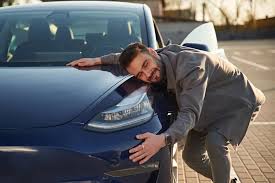
The Cars That Carried Us: How Vehicles Become Witnesses to Our Emotional Lives
There’s a particular kind of silence that exists inside a car. Different from the silence of a room, the silence of a forest, the silence of a bed at 3 a.m. It’s a silence shaped by motion, by the hum of the engine, by the world moving past the windows while something quieter happens inside.
This is why so much of what we don’t say out loud gets said in cars anyway. The conversations that mattered most. The arguments that should have ended relationships and didn’t. The arguments that did end them. The first I love you that came out somewhere on a back road. The last conversation with someone we’d never see again. The drive home after the funeral. The drive home after the diagnosis. The drive nowhere in particular at 2 a.m. when we couldn’t sit still in our own house anymore.
If walls could talk, we’d be in trouble. But cars are quieter than walls. They hold things. They become repositories of memory in ways we barely notice until we sell one and feel an irrational, surprising grief — not for the car itself, but for everything the car was present for.
This is a meditation on the emotional life of vehicles. And, at the end, a quiet reminder that the cars carrying our memories are also physical machines that need care — which is why finding a trustworthy mechanic, like Woodinville Auto Repair for those in Washington State’s Eastside, is one of those practical things we don’t think about until the car we’ve shared our most significant years with starts asking for help.
The Cars That Witnessed Our First Loves
There’s a reason teenagers count down to driver’s licenses with such intensity. It’s not just freedom of transportation. It’s the first private space we ever have — a small mobile room where parents aren’t listening, where the doors close, where conversations can happen that couldn’t happen anywhere else.
For an entire generation, first love and the first car are intertwined memories. The specific car becomes the setting for the specific feeling. We remember the smell of the interior. The particular squeak of the passenger door. The radio station that kept skipping. The exact spot in the bench seat where they leaned their head when they fell asleep on the drive home.
Years later, you’ll see the same model in a parking lot and feel something hit you in the chest that you weren’t prepared for. The car has done what cars do — it has remembered for us, and presented the memory back without warning.
The Unsent Project archives contain countless messages from people processing exactly this — first loves carried in first cars, late-night drives that meant everything, the specific geography of a relationship that took place largely in motion. The car was witness. The car was complicit. The car was part of the relationship in ways we don’t quite have language for.
The Cars That Witnessed the Endings
If first loves get the romantic credit, breakups get the quiet, uncelebrated truth of how much driving they involve.
The drive to the place where you knew the conversation was going to happen. The drive home from it. The week of driving in circles because being still felt impossible. The drive to drop off the box of things that needed to be returned. The drive to pick up the box of things that came back.
Cars carry breakups. They carry the specific weight of endings — quiet, contained, moving forward physically while standing still emotionally. There is something perfectly matched about heartbreak and highway driving. The forward motion mimics what we wish we could do internally. The destination, however arbitrary, becomes proof that we can still go somewhere.
The unsent messages people compose in these moments — to the person they’re leaving, to the person who left them, to the version of themselves they were before — are often composed in cars. Sitting in parking lots. Pulled over on shoulders. Stopped at red lights that turned green and turned red again before we managed to move.
The car kept the engine running. The car waited. The car was, perhaps, the only thing that day that wasn’t asking anything of us.
The Cars That Witnessed the Hardest News
There’s a category of memory that lives in cars and almost nowhere else: the drives we took when something was very wrong.
The drive to the hospital when the call came. The drive home with results that changed everything. The drive to break the news to someone who didn’t know yet. The drive away from places we had to leave, sometimes with our entire life packed into the backseat.
These drives don’t have visible markers. From the outside, they look like any other commute. Inside, they are some of the most consequential hours of our lives. The car becomes the only witness — the steering wheel under our hands, the music we couldn’t bring ourselves to turn off, the rain that arrived at exactly the moment it would have been narratively appropriate for it to arrive.
People who have driven through these moments often say something similar afterward: the car saved them. Not literally — though sometimes that too — but in the sense that the act of driving gave them somewhere to put the time. Somewhere to put the body that didn’t know where else to be.
Decades later, we remember the make and model. The year. The color. The car becomes a date on a calendar in our personal history.
The Passengers Who Were There
Cars hold not just our emotional moments but the people who shared them. The seat patterns of our lives — who sat where, who claimed which side, who always changed the music, who fell asleep within five miles every time, who couldn’t sit still for ten — these are intimate maps of relationships.
The passenger seat of a long-term partnership has its own emotional residue. The way the seat adjusts to their height. The collection of their things that accumulated in the door pocket. The specific angle the side mirror was set for their shoulder, which you still automatically adjust when you sit there now.
The child seat that occupied the back for years before it didn’t anymore. The friend who always took the front. The parent you drove to appointments toward the end of their life. The sibling who rode shotgun on the road trip that became one of your favorite memories.
Cars don’t just witness our emotional lives. They hold the geography of who has been in them with us — sometimes for years, sometimes for one specific significant evening that we’ll never quite forget.
Selling a Car That Mattered
There’s an experience that most car owners eventually have which deserves more cultural acknowledgment than it gets — the moment of selling or giving up a car that meant something.
It happens for various reasons. The car finally reached the end of its mechanical life. You needed something more practical. Your circumstances changed. Whatever the cause, the moment of handing over the keys to a stranger, watching them drive away in something you spent years inside, contains a strange grief that’s hard to articulate to anyone who hasn’t felt it.
You’re not mourning the metal and plastic. You’re mourning the years of your life that were spent inside it. The morning commutes during the chapter when you were doing that job. The summer trips with friends you don’t see as often anymore. The drives home from the hospital after each of your kids was born. The car becomes a container for a period of life, and letting it go feels like letting go of the container as much as the contents.
This is part of why some people keep cars long past the point of financial sense. The math says replace it. The heart says it has been with me through too much to be reduced to a trade-in value.
Why Caring for the Car Is Sometimes Quiet Care for the Memory
There’s a connection here that doesn’t get articulated often. People who have driven a particular car through the most significant years of their life often develop a quiet attentiveness to its maintenance — not because they’re car enthusiasts, but because the car has become something more than a machine to them.
Caring for the car becomes one of the ways we honor what the car has been present for. Keeping it running well, fixing what needs fixing, treating it with the respect appropriate to something that has carried us through the difficult years and the wonderful years and the unremarkable years that turned out, in retrospect, to be the most important ones.
This isn’t sentimental excess. It’s a recognition that some objects in our lives accumulate meaning beyond their material function. The wedding ring is not the marriage. But it’s also not just metal. The car is not the years. But it’s also not just an appliance for transportation.
For those who feel this — and many people do, more than the dominant cultural conversation acknowledges — finding a quality mechanic becomes an emotional decision as much as a practical one. You want someone who will treat the car well. Who will explain what’s needed without inventing things that aren’t. Who understands, even without being told, that this isn’t just a car.
For drivers in Woodinville and the broader Eastside, places like Ali’s Woodinville Auto Repair offer exactly this kind of care — experienced technicians, transparent communication, work on all makes and models, and the kind of long-term community presence that allows you to build the trust over time. It’s the difference between a transactional repair experience and a relationship with someone who is, in some small way, helping you take care of the thing that has taken care of you.
The Cars That Outlast the Relationships
Here’s a quiet truth that takes most people by surprise the first time they encounter it: the car often outlasts the relationship.
You bought it together. You drove it on the trips that defined the early years. You picked it up from the dealership on a day you both remember vividly. And then years later, after the relationship has ended, you’re still driving it. Maybe alone. Maybe with someone new who doesn’t know about the trips that car already took.
The car becomes a strange kind of artifact — older than the current chapter of your life, but still present in it. Some people sell the car immediately after the breakup specifically to avoid this. Others can’t bring themselves to do it for reasons they can’t fully explain. Both responses make sense.
There’s something philosophically interesting about a relationship ending while its physical traces continue. The car runs the same. The engine still starts. The interior still has the slight scratch from the time you didn’t quite clear the curb in 2018. The object persists; the chapter it belonged to does not.
The Drives We Take Just to Drive
One more category of car memory worth naming: the drives we take with no destination, when something inside us needs motion in order to settle.
These are the late-night drives after fights with people we love. The early-morning drives before anyone else is awake. The drives during difficult periods when sitting in the house felt impossible and there was no specific place to go but anywhere was better than staying.
The car becomes a kind of moving room — a private space we can take with us. We don’t have to explain to anyone where we’re going because we’re not going anywhere. We’re just driving. The forward motion is the entire point.
These drives, when we remember them later, often turn out to have been important. Something was processed during them that couldn’t have been processed anywhere else. The combination of motion, privacy, and the absence of any expectation of conversation produces a kind of mental space that few other settings provide.
The cars that carry us through these moments are doing real work, even when it looks from the outside like we’re just driving.
A Final Word
We don’t often think of cars as emotional artifacts. They show up in budgets, in commercials, in conversations about practicality and efficiency. But quietly, beneath all of that, the cars in our lives become witnesses to the things we don’t say out loud — the unsent messages we compose at red lights, the conversations we have with people who aren’t there, the silent processing of joy and grief and uncertainty that fills the hours we spend behind the wheel.
The unsent messages we type and delete in our phones have a parallel in the messages we never quite finish saying inside the cars we drive. Both are real. Both have weight. Both deserve some acknowledgment.
Taking care of the cars that have taken care of us is one of the smaller, quieter forms of honoring that weight. Sometimes it’s just an oil change. Sometimes it’s a major repair. Sometimes it’s the decision to keep a car a few years longer than the spreadsheet recommends, because the car still feels like a part of the life you’ve been living, and you’re not quite ready to give that up.
Whatever the form, the impulse is real and worth honoring. The cars that carry our memories deserve to be carried in return.
FAQs
Q: Why do people get so emotionally attached to cars?
A: Because cars are present for a disproportionate amount of our significant emotional moments — first relationships, major life transitions, difficult drives during crises, road trips that became defining memories. Objects that witness our lives accumulate meaning beyond their physical function.
Q: Is it normal to feel grief when selling or giving up a car?
A: Yes. It’s a more common experience than people talk about. The grief isn’t about the vehicle itself — it’s about the period of life the vehicle was associated with. Letting go of the object can feel like letting go of the chapter.
Q: How do I find a mechanic who’ll treat my car with respect?
A: Look for ASE-certified technicians, transparent communication, willingness to explain and show you the actual issue, fair pricing with written estimates, and a track record of long-term community presence. Quality shops have these characteristics consistently, regardless of location.
Q: Should I keep an older car that has sentimental value, even when the math says replace it?
A: This is a personal decision. The math should inform but doesn’t have to decide. Some people find significant value in keeping a vehicle through its full natural life because of what it represents. Others find the practical considerations win out. Both choices are legitimate.
Q: How can I take better care of a car that means something to me?
A: Follow the maintenance schedule. Address small issues before they become big ones. Build a relationship with a quality repair shop you trust over time. Keep good records of services performed. Treat the car with the kind of consistent attention that protects what it represents to you.
Q: Is there a way to honor a car you’ve sold or given up?
A: People do this in different ways — keeping photos, keeping a small object from the car (a keychain, a charm), or simply allowing themselves the small grief of the transition without dismissing it. Some people write the kind of unsent letters that this site honors — to the cars that carried them through important years. There’s no wrong way.