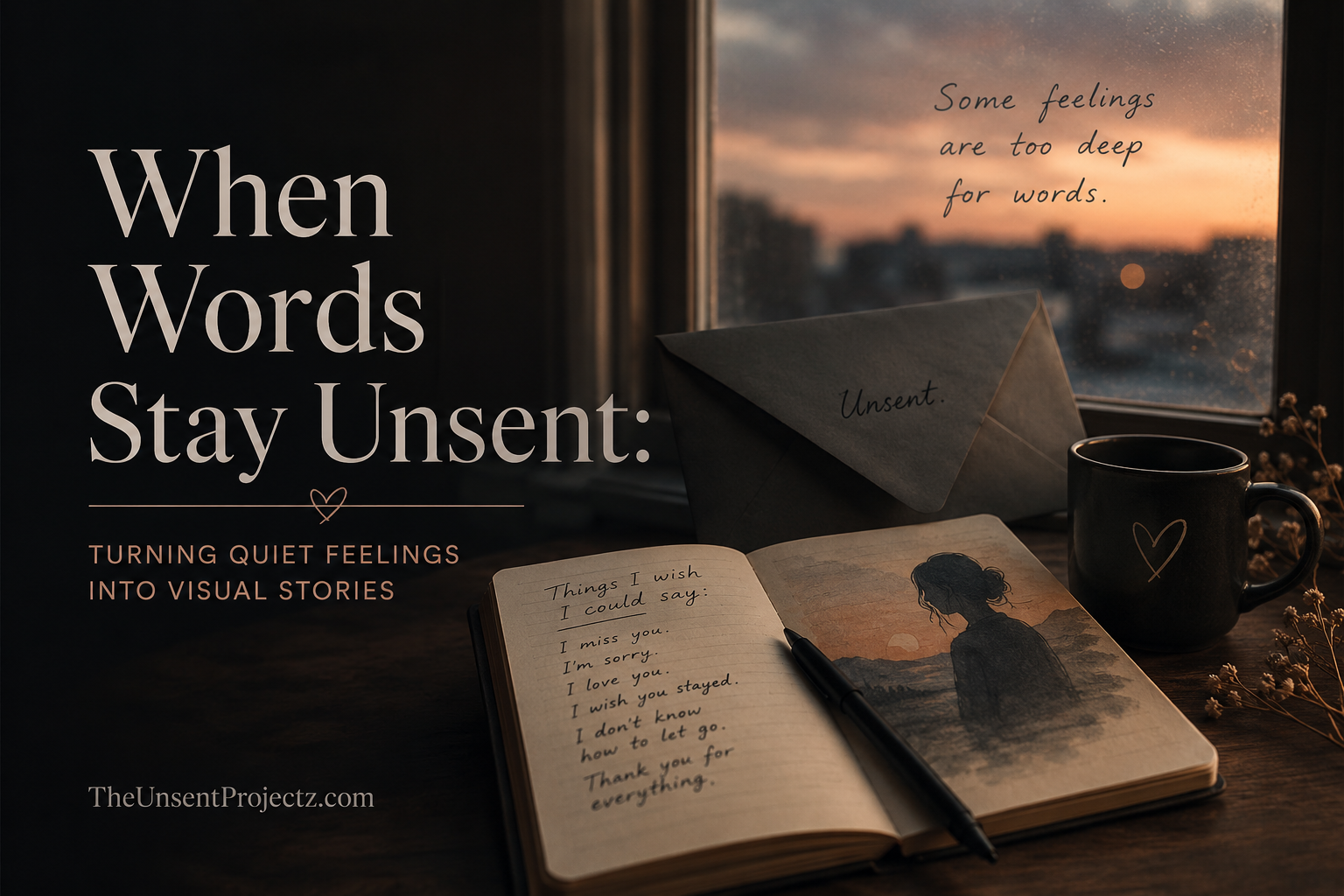
When Words Stay Unsent: Turning Quiet Feelings Into Visual Stories
Some messages never make it to their destination.
They stay in notes apps, unfinished drafts, private journals, or in the back of someone’s mind for years. Not because they don’t matter—but because they matter too much. That quiet space between what we feel and what we say has become deeply familiar online, especially in places built around anonymous emotion, memory, and reflection.
There’s something powerful about expressing feelings without expecting a reply. And while text has always been the easiest way to do that, visual storytelling offers another layer entirely: tone, atmosphere, movement, timing, and emotion that words sometimes struggle to hold.
If you’ve ever wanted to express something that feels too big, too complicated, or too unfinished for a simple message, one option is to create a video and turn those emotions into something personal, cinematic, and meaningful.
Why Unsent Emotions Stay With Us
Not every conversation gets closure.
People carry things they never said to old friends, first loves, family members, versions of themselves, or moments they can’t revisit. Sometimes the message exists only because we need to understand our own emotions—not because we want someone else to read them.
That’s part of why spaces centered on anonymous expression resonate with so many people. They create room for honesty without pressure.
But there’s an interesting shift happening: more people are moving beyond written confession and experimenting with visual forms of expression.
A short video can capture things that paragraphs often can’t:
- A sequence of old photos
- Colors that reflect a mood
- Music that changes emotional tone
- Text that appears slowly, like a thought unfolding
- Silence that says more than dialogue
The result isn’t necessarily content for others. Sometimes it’s simply a way to process.
The Difference Between Writing and Visual Storytelling
Writing is direct.
Video is layered.
Imagine writing: “I miss who we used to be.”
Now imagine a ten-second sequence:
- Empty train seats
- Warm evening light
- A short sentence fading in and out
- Ambient sound instead of music
Same emotion. Different impact.
That doesn’t mean video is better than writing. It simply creates another channel for emotions that don’t fit neatly into sentences.
People often discover unexpected clarity when translating feelings into visuals because they stop trying to explain and start trying to express.
A Different Kind of Message: One You Don’t Send
One of the most interesting creative exercises is making something that has no intended audience.
No posting.
No tagging.
No expectation.
Just documenting a feeling honestly.
Try this structure:
1. Start With One Sentence
Don’t write a full script.
Choose one line:
- “I never said goodbye.”
- “I wish I knew then.”
- “You changed me.”
- “I’m okay now.”
Keep it simple.
2. Collect Emotional References
Not aesthetic references—emotional ones.
Look for:
- Photos from your camera roll
- Places that remind you of a moment
- Colors tied to a memory
- Sounds that create a feeling
This step matters more than editing.
3. Build Around Atmosphere, Not Perfection
People often get stuck trying to make something polished.
But emotional storytelling usually works better when it feels real.
Leave pauses.
Use imperfect footage.
Let transitions breathe.
Not everything needs dramatic music or cinematic effects.
4. End Without Explaining Everything
This is where most people over-edit.
Leave some space.
Unfinished emotions often feel more authentic than neat conclusions.
Why This Creative Process Feels So Personal
There’s psychology behind this.
Externalizing emotions—through writing, art, music, or visual creation—can help people organize thoughts and create distance from experiences without disconnecting from them.
You’re not erasing the feeling.
You’re giving it shape.
That’s why many people revisit old journals and realize they remember less of the exact words and more of the feeling those words carried.
Video can preserve that feeling in a different way.
Not as evidence.
Not as performance.
Just as expression.
Real-Life Inspiration Without Making It Complicated
You don’t need professional equipment.
Some meaningful visual stories are made from:
- Notes screenshots
- Everyday moments
- Voice recordings
- Simple text overlays
- Photos already sitting unused in your gallery
A student reflecting on a friendship.
Someone documenting growth after a difficult year.
A person expressing gratitude they never said out loud.
These aren’t productions.
They’re moments.
And often, the quieter the idea, the more people connect with it.
When You’re Ready to Say Something—Even If Nobody Hears It
There’s no rule that emotions have to become conversations.
Some stay private.
Some become art.
Some become something you revisit years later and realize you needed to make more than you needed to share.
The value isn’t always in being understood by someone else.
Sometimes it’s simply in finally giving shape to something that had been sitting silently inside you.
Conclusion
Not every message belongs in an inbox.
Some belong in a journal. Some belong in memory. And some become stories told through images, movement, and mood instead of direct words.
If you’ve been holding onto something difficult to explain, consider exploring another format for expression. You don’t need a perfect script or a dramatic ending—just a starting point and the willingness to make something honest.
Because even unsent emotions deserve somewhere to exist.