We’ve all been there—fingers flying across the screen, pouring out something real, something heavy, and then… pause. The cursor blinks. Your thumb hovers over “send,” but something stops you. You close the app, heart racing a little. That frozen moment between wanting to say it and deciding not to—that’s the quiet magic the Unsent Project captures. It’s a space for all those messages we type but never release into the world. They don’t just disappear; they linger in our minds, whispering what we couldn’t voice.
In a time when everything feels shared—posts, stories, reactions—the Unsent Project pushes back. It asks: What about the stuff we hold back? The drafts that pile up, the texts we delete line by line, the letters we crumple before mailing? This is where the project thrives, in that gap between thinking and doing, between speaking and silencing.
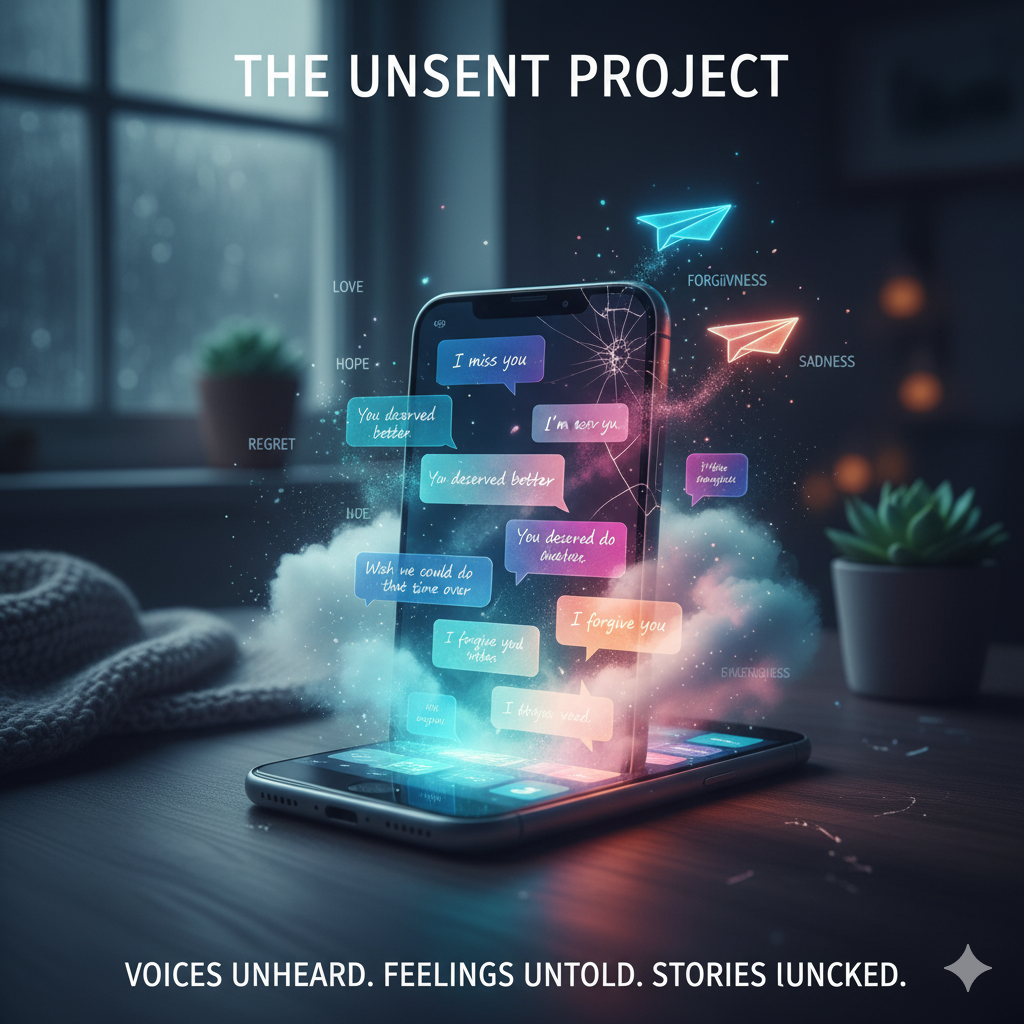
Over the next sections, I’ll dive into what it actually is, its backstory, how you get involved (if you’re curious), why it hits so hard for so many, the patterns that show up, some honest downsides, ways it spills into real life, a simple guide to trying it yourself, its place in our always-online world, and even a nod to why it might spark ideas if you’re into building things. Let’s unpack this together.
What the Unsent Project Really Is
Deep down, the Unsent Project is just a massive collection of texts people wrote but never hit send on. It kicked off in 2015, started by artist Rora Blue as this intimate experiment tying first loves to colors. What began small has exploded—millions of anonymous submissions from everywhere, all over the globe.
These aren’t only sappy love notes (though plenty are). “First love” gets stretched wide here: it could be to an old flame, a childhood buddy, a family member, even your dog who passed away. Every message gets tagged with a color the writer picks, turning feelings into something you can see—a splash of hue that says more than words sometimes can.
It’s part archive, part community art piece, part giant confession wall. Your private almost-words become part of something bigger, something anyone can scroll through and feel less alone in.
Origin Story and Intent: Why It Started
Rora Blue’s spark was straightforward but poignant: “What color do you see love in?” She invited folks to share unsent texts about their first loves, linking each to a shade that captured the vibe. It came from her own life—those messages she drafted, stared at, and ultimately buried inside.
At first, it was tiny, just a few entries trickling in. But it tapped into something universal: that split-second delete, the revise-until-it’s-gone, the fear of what sending might unleash. People related hard, and submissions poured in. What emerged was this blend of art, memory-keeping, raw emotion, and internet magic—turning solo regrets into a shared tapestry.
How the Unsent Project Works
Submission Process
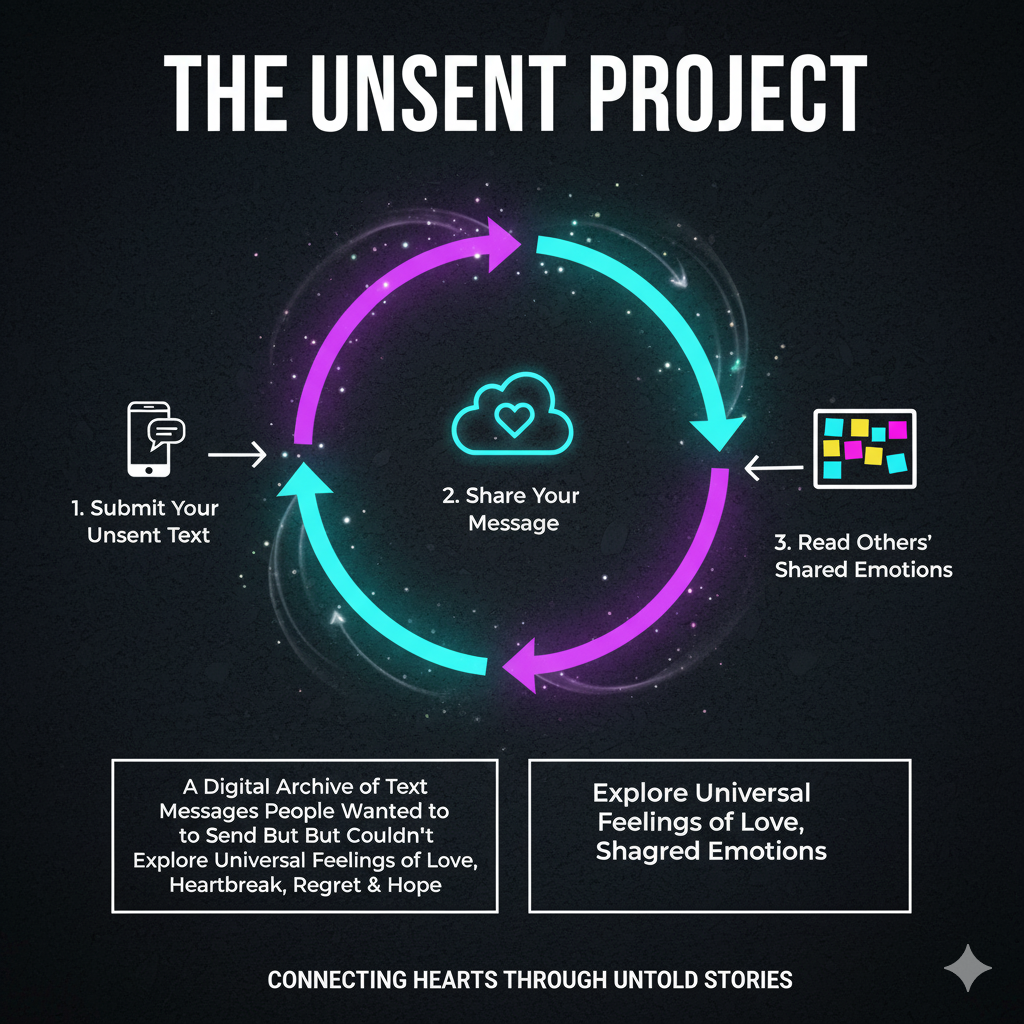
Jumping in is easy if the mood strikes. Head to the site, type out your message (start with “To [Whoever]” or leave it blank), select a color that matches the emotion bubbling up, and submit. Everything stays anonymous—no names, no accounts. They cap it at one a day to avoid overload.
After you send it off, it goes into a moderation queue. It might pop up right away, or you could wait days, even weeks. Some folks share stories of checking back obsessively until their words appear.
Archive and Search
The heart of it is the searchable archive. Punch in a name to hunt for messages that might be for you (or pretend one is). Or filter by color—dive into the blues when you’re melancholic, or reds when passion’s on your mind. Keywords work too, depending on the setup. It’s like wandering through emotions visually.
Color and Emotion
Colors aren’t random flair; they’re the emotional core. Blue often means deep love mixed with ache, black for outright despair, white for what’s missing, red for fire—whether anger, lust, or fierce thanks. Pink might capture that soft try that didn’t land. It guides how you read and feel each entry.
Anonymity + Visibility
Here’s the push-pull: total anonymity on your end, but once it’s in, anyone can see it. That mix—spilling your guts without a face, yet knowing strangers might read—creates this intense, vulnerable energy. It’s what makes the whole thing pulse.
Why the Unsent Project Resonates
It sticks because we’ve all got those unsent ghosts rattling around.
A Mirror for Unsaid Thoughts
Scrolling through, you stumble on something that echoes your own deleted draft. It’s like, “Wait, that’s exactly what I almost said.” Suddenly, your private mess feels universal. You’re not the only one carrying that weight.
Emotional Outlet Without Immediate Fallout
Real sending? It invites replies, shifts relationships, maybe blows things up. Here, you vent without the backlash. No awkward follow-up, no changed dynamics—just release. It’s safe space for the stuff too scary to say out loud.
Shared Human Experience
The range is wild: crushes that fizzled, apologies unspoken, simple “I miss yous” to people long gone. It’s a map of what connects us—longing, screw-ups, quiet thanks. Beneath all the filtered selfies online, this reminds you: everyone’s hiding a layer of real feeling.
Cultural Reflection on Digital Life
We broadcast nonstop, but the Unsent Project spotlights the opposite—the erased, the paused. It’s a quiet rebellion against constant sharing, a nod to the inner world we curate but rarely expose. In that, it’s pure catharsis wrapped in art.
Themes & Patterns Within the Archive
Spend time browsing, and repeats jump out—themes that weave through like threads in a blanket.
First Loves, Friends, Family
Sure, romance dominates early on, but it spans everything: exes who ghosted, friends who drifted, parents you never thanked properly, pets you still talk to in your head. It’s about bonds, period—lost, strained, cherished.
Regret, What Ifs & Closure
So much circles “if only”—roads not taken, words swallowed. These are time machines to alternate endings, holding that bittersweet sting of possibility.
Apology, Gratitude, Silence
“I’m sorry” floods in, for hurts never mended. Gratitude too, for impacts never acknowledged. Then the silences: friendships that faded without a fight, endings without goodbye. Simple check-ins like “Hope you’re good” carry oceans.
Color as Emotional Lens
Blues rule, blending love’s warmth with sorrow’s chill. Pinks for fragile attempts, blacks for voids, whites for echoes of absence. Browsing by hue turns it into a mood board—you follow where your heart pulls.
It’s not flashy; it’s a living record of how we feel but don’t say.
Critiques & Potential Pitfalls of the Unsent Project
Nothing’s perfect, and this has edges worth watching.
Authenticity and Anonymity
No names means freedom, but also room for fakes—embellished tales, jokes, whatever. It doesn’t ruin it, but you might wonder: Is this real, or just internet theater?
Searching for Your Name & Emotional Traps
Typing your own name in? Tempting as hell. But zero hits don’t mean no one cared; a match might not be yours. It can spiral into obsession, reopening scars instead of healing them.
Public Exposure of Private Feelings
Anonymous, yes—but forever public. No deletes allowed once it’s up. For some, that’s liberating; for others, it feels like stripping bare to the world. Intimate thoughts out there, no take-backs.
Emotional Triggers Without Support
The heavy stuff piles up—grief, betrayal, despair. Cathartic, sure, but it can flood you if you’re not ready. This isn’t a counselor; it’s raw exposure. Browse with care.
These aren’t deal-breakers; they’re reminders to step in mindfully.
The Unsent Project and Its Applications in Life
It ripples out, inspiring ways to use the idea beyond the site.
Journaling and Personal Reflection
No need to submit publicly. Jot your message, pick a color, stash it in a notebook. It’s like decluttering your brain—externalizing the stuck stuff without judgment.
Creative & Digital Art Influence
That text-on-color vibe? It’s everywhere now—social graphics, art prints, zines. Creators remix it: unsent vibes in collages, exhibits, even offline installations.
Use in Workshops, Education & Community Settings
Teachers prompt kids: “Write your unsent note, choose your shade.” Groups share anonymously, building empathy. It’s a soft door to talking feelings without pressure.
Healing & Closure Practices
The act alone—writing, coloring, releasing—can shift burdens. It turns haunting drafts into something tangible, something you can set down.
How to Participate in the Unsent Project (or Use Its Framework)
If you’re intrigued, here’s a gentle path in.
- Reflect First Pause with the feeling. Who’s it for? What words keep looping in your head?
- Write the Message Keep it real—like a text you’d almost send. “To Mom” or whatever fits. No polishing needed.
- Choose a Color Close your eyes if it helps. What shade matches the memory, the ache, the warmth?
- Submit (Option A: Public) On the site: English only, one daily, agree to terms (it’s permanent). No promises on when—or if—it shows.
- Reflect on Submission Give it breathing room afterward. Peek at the archive, but don’t obsess. Feel what surfaces.
- Option B: Private Version Journal it, color it (literally draw a swatch), file it away. Revisit or ritual-burn later.
- Use It in Creative or Group Context Host a circle: everyone writes, picks colors, shares if they want. The “me too” moments bond people.
The Unsent Project in the Digital Age: Relevance & Impact
We’re drowned in shares—endless feeds of highs. This honors the lows, the pauses.
Oversharing vs. Under-sharing
We post the gloss, delete the grit. The project says the deleted matters too—it’s the full human picture.
Archival of Emotion
It’s a snapshot of now: searchable feelings across time, places. A cultural relic of digital hearts.
Mental Health & Emotional Authenticity
Voicing the suppressed? Gold for the soul. It nudges us toward owning our mess, vulnerability as strength.
Community of Hidden Voices
No faces, just feelings connecting. You relate to the stranger’s words because they’ve lived in you too.
Why “Unsent Project” Matters to You (Developer Perspective, Emotional Angle)
As someone who builds, picture this: user drops text + color, system archives, searches, displays. Simple UX for big impact—anonymity without hassle, database magic for name/color hunts, frontend that lets hues evoke mood. Privacy baked in, terms clear. It’s lean inspiration: minimal inputs yield profound outputs. Could spark your own twist—unsent feedbacks at work, voice-note confessions? The balance of tech and heart here is chef’s kiss.
FAQs
Final Thoughts: Letting Your Unsent Words Fly
Bottom line: that message weighing on you—”thanks,” “sorry,” “miss you,” whatever—it deserves air. The Unsent Project gives it a landing spot, public or private. Writing it, coloring it, releasing it closes a loop. It stops haunting; it becomes story. Alone or seen, you’ve honored it. And in that, you’re freer—and connected to everyone else carrying the same quiet load.