How SaaS Is Changing Business Software for Companies of Every Size?
Business software has changed significantly over the last decade. Companies no longer need expensive hardware, complex installations, or lengthy deployment processes to access professional tools. Instead, SaaS has become a practical choice for organizations looking for flexibility, lower upfront costs, and continuous updates. From startups to multinational companies, businesses rely on cloud based services to handle communication, project management, finance, customer relationships, marketing, and many other daily operations.
Rather than purchasing software that requires installation on individual computers, users simply access applications through an internet connection. This approach saves time while giving teams the ability to work from nearly anywhere. As remote work and distributed teams continue to grow, businesses increasingly view SaaS as an efficient solution that supports productivity without adding unnecessary complexity.
What Is SaaS?
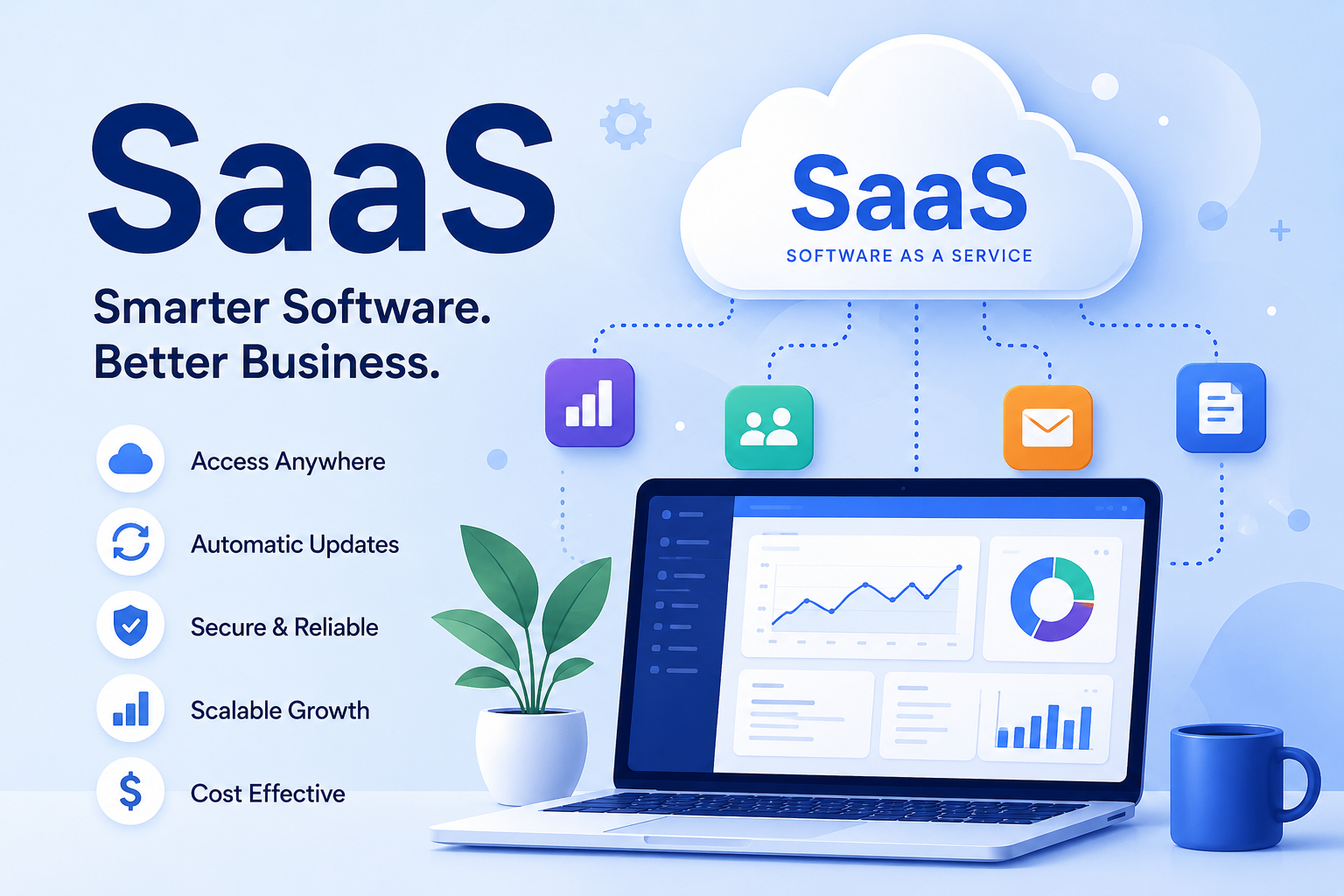
SaaS, short for Software as a Service, is a software delivery model where applications are hosted by a provider and accessed online through a web browser or dedicated application. Instead of buying software licenses and managing servers internally, customers subscribe to the service, often through monthly or annual plans.
The provider handles hosting, maintenance, updates, backups, and security improvements. Customers simply log in and use the software without worrying about technical maintenance.
This model has become popular across industries because it reduces many of the technical challenges traditionally associated with business software.
Why Businesses Prefer Cloud Software
One of the biggest reasons companies adopt cloud software is convenience. Traditional software often requires installation, manual updates, and dedicated IT support. SaaS removes many of these responsibilities.
Organizations also appreciate predictable subscription pricing. Rather than making a large investment before using software, businesses can spread costs over time while selecting plans that match their needs.
Additional benefits include:
- Faster implementation
- Automatic software updates
- Remote accessibility
- Lower maintenance costs
- Easy scalability as teams grow
These advantages help companies stay productive while focusing more on business goals instead of infrastructure management.
Common Types of SaaS Applications
Modern SaaS applications support nearly every department within an organization. Whether a company has five employees or fifty thousand, there are solutions designed for almost every workflow.
Some common categories include:
- Customer relationship management
- Accounting software
- Human resource management
- Email marketing platforms
- Team collaboration software
- Video conferencing
- Inventory management
- Project management
- Customer support systems
- Document storage
Many businesses combine several SaaS applications into one connected workflow, allowing information to move automatically between different systems.
Benefits for Small Businesses
Small businesses often operate with limited budgets and lean teams. Purchasing enterprise level software along with servers and technical support can become expensive very quickly.
A SaaS platform offers a practical alternative by providing access to professional tools through affordable subscription plans. Companies can start with basic features and later upgrade as their business grows.
Additional advantages include:
- Minimal setup requirements
- Reduced hardware expenses
- Quick onboarding for new employees
- Flexible pricing options
- Reliable backups managed by providers
This allows entrepreneurs to spend more time serving customers instead of managing software installations.
Why Large Enterprises Continue Using SaaS
Large organizations also gain significant value from SaaS despite having dedicated IT departments.
Enterprise businesses frequently manage offices across multiple cities or countries. Cloud based systems allow employees to access the same information regardless of location.
Other enterprise advantages include:
- Centralized data management
- Easier collaboration between departments
- Consistent software versions
- Better scalability during company growth
- Integration with existing enterprise systems
Because updates happen automatically, organizations reduce the time spent maintaining outdated software.
Security in SaaS
Security remains one of the most common questions businesses ask before adopting any online service.
Reputable SaaS providers invest heavily in data protection because their reputation depends on customer trust. Security features often include encrypted connections, multi factor authentication, routine backups, access controls, and continuous monitoring.
Businesses also play an important role by using strong passwords, limiting account permissions, and training employees to recognize phishing attempts.
When both providers and customers follow good security practices, SaaS can provide a highly reliable environment for storing business information.
Choosing the Right SaaS Business Solution
Selecting the right SaaS business solution requires more than comparing prices. Every organization has unique goals, workflows, and technical requirements.
Before making a decision, companies should evaluate several factors.
Consider how well the software fits existing processes. Check whether it integrates with current tools. Review pricing carefully to understand future costs as the business grows.
It is also helpful to examine customer support quality, user reviews, available documentation, and training resources.
Many providers offer free trials, giving businesses an opportunity to evaluate usability before committing to a subscription.
Integration Makes Work Easier
Modern businesses rarely rely on a single application. Sales teams, finance departments, customer support representatives, and marketing professionals often use different software platforms throughout the day.
The ability for these systems to communicate creates significant efficiency.
For example, customer information entered into a CRM can automatically appear inside invoicing software or marketing platforms without requiring duplicate data entry.
These integrations reduce manual work, improve accuracy, and save valuable time.
The Role of Artificial Intelligence in SaaS
Artificial intelligence has become an important feature across many SaaS products.
Companies now use AI to automate repetitive tasks, summarize reports, generate content suggestions, analyze customer behavior, detect unusual activity, and provide virtual assistants.
These capabilities help employees complete work more efficiently while allowing businesses to make informed decisions using real time insights.
As AI technology continues to improve, SaaS providers will likely introduce even more intelligent features that simplify everyday operations.
Industry Specific SaaS Solutions
Although many platforms serve a wide audience, numerous SaaS providers focus on particular industries.
Healthcare organizations use specialized systems for patient management.
Retail companies rely on cloud software for inventory and online sales.
Educational institutions manage virtual classrooms through dedicated learning platforms.
Construction firms coordinate projects using industry focused management software.
Legal professionals organize case files with secure document management systems.
This specialization allows businesses to choose software that closely matches their operational requirements.
Future Growth of SaaS
The popularity of Software as a Service continues to increase because organizations value flexibility and accessibility.
Businesses expect software to work across computers, tablets, and smartphones while supporting remote collaboration. Subscription models also provide financial flexibility that many organizations prefer over large one time purchases.
As internet connectivity continues improving across more regions, additional companies are expected to adopt cloud based business software.
Providers will likely continue improving automation, analytics, security, and customization, making SaaS an even stronger choice for organizations of every size.
Learning More About SaaS
Business owners who want practical insights into software trends, cloud technologies, and business growth strategies may find value in reading the AppLuxe SaaS Blog, which regularly shares useful information for companies evaluating modern software solutions.
Final Thoughts
SaaS has fundamentally changed how organizations access and manage business software. Instead of investing heavily in infrastructure, companies can subscribe to services that provide continuous improvements, reliable performance, and flexible pricing.
Whether a business needs accounting software, project management tools, communication platforms, or customer relationship management systems, modern SaaS applications provide practical options that support long term growth. As organizations continue adopting cloud software and expanding their digital capabilities, the role of the SaaS platform will remain central to business operations across industries. Choosing the right SaaS business solution allows companies to improve efficiency, support collaboration, and remain competitive while adapting to changing market demands.