When What You Never Sent Meets What Time Erased: Unsent Project Wayback Machine
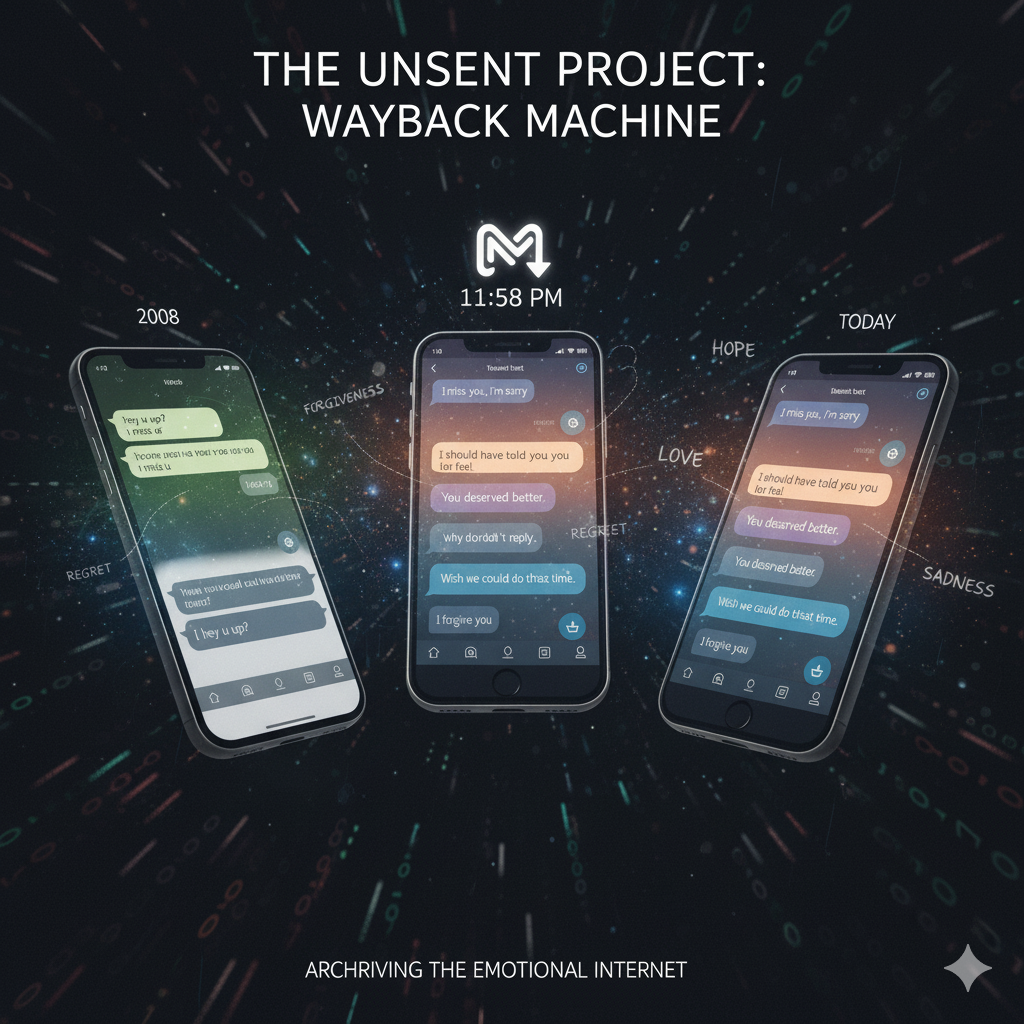
You know that tug in your gut—the one where you type out something real, like “I’m sorry I let you down” or “I still think about that night,” and your finger just… stops. The send button blinks, innocent as anything, but you can’t. You delete, you close, you pretend it never happened. But it did. That unsent message sticks around, echoing louder sometimes than the ones you actually fired off. Now picture a whole online graveyard for those ghosts—a place like the Unsent Project where millions of almost-texts live on, color-coded and searchable. And then imagine wanting to rewind the clock on that graveyard, to see how it looked back in 2016, or right before some big update swallowed your words. That’s the magic (and the ache) of the Unsent Project Wayback Machine.
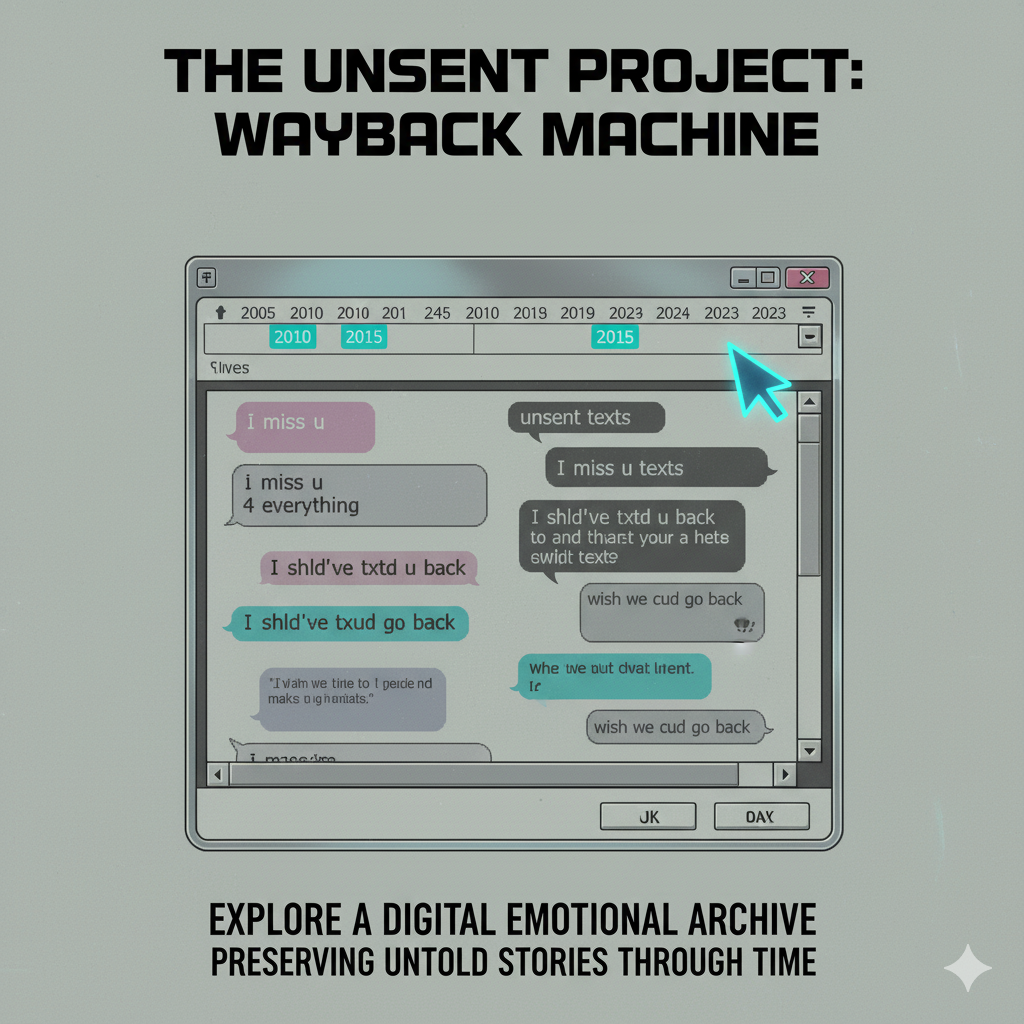
It’s not some fancy official gadget from the project itself. Nah, it’s everyday folks like you and me firing up the Internet Archive’s Wayback Machine to time-hop through old versions of the site. Hunt for a lost submission, relive the rawer days of the archive, or just stare at how this vault of unsaid feelings has morphed over the years. It’s unsent words meeting erased time—two kinds of loss colliding into something strangely hopeful.
In the wander ahead, we’ll unpack what the Unsent Project really is, how slapping the Wayback Machine on it works, why it pulls people in (hard), a no-frills guide to trying it yourself, the hits and misses you’ll run into, what those dusty snapshots spill about the site’s glow-up, the tricky emotional and ethical spots, some clever hacks, and what this whole mash-up whispers about our glitchy digital hearts.
Defining the Unsent Project & Why It Matters
Let’s ground ourselves before we start flipping through calendars. The Unsent Project is this sprawling online hideout for messages people typed but never had the guts (or the timing) to send. Think confessions to crushes that crashed, apologies that felt too late, quiet “thank yous” to folks who slipped away. You pour it out, slap a color on it that matches the vibe—blue for the blues, red for the rage or rush—and toss it anonymously into the mix. Then anyone can poke around: search a name, filter by hue, scroll through the heartbreak rainbow.
These unsent bits hit different because they’re frozen in that raw, unresolved spot—no replies to twist them, no context to soften the edges. Submitting one can feel like uncorking a bottle you’ve been shaking for years. Browsing? It’s like eavesdropping on the world’s collective 2 a.m. thoughts, realizing your silence has company.
So why chase a Wayback version? Sites aren’t statues; they shift. A redesign here, a moderation tweak there, and poof—your 2018 gem might vanish from the live feed. “Unsent Project Wayback Machine” is the shorthand for folks using the archive’s time machine to hunt those ghosts, confirm “yeah, it was real,” or just soak in the site’s scrappier, wilder past. It’s not about the tech—it’s about reclaiming a sliver of what time (or updates) tried to swipe.
Understanding the Wayback Machine & Its Role for the Unsent Project
The Wayback Machine? It’s this massive, free web time-capsule run by the Internet Archive, snapping pics of sites as they were on random days gone by. Punch in a URL, and bam—you’re browsing yesterday’s internet, or last decade’s.
For the Unsent Project, it’s like a dusty attic full of old photo albums. Feed it theunsentproject.com, and you get a calendar dotted with blue circles—each one a frozen moment. Click one from 2017, and you’re staring at the site in its awkward teen phase: maybe clunkier fonts, wilder colors, a submission form that felt wide open.
It lets you spot when the search got smarter, when colors got curated, or when your name might’ve popped in results that now draw blanks. It’s not perfect—dynamic stuff like live searches often ghosts out—but it’s a portal to “remember when this felt endless?”
Why People Search for the “Unsent Project Wayback Machine”
What pulls someone down this rabbit hole at midnight? It’s rarely just curiosity—there’s heart in it.
Picture submitting in 2019, checking back in 2024, and… nothing. Your words, gone. Folks swear pre-2023 stuff got swept into some moderation limbo, and suddenly you’re questioning your memory. Wayback becomes the detective: “Was it ever there?”
Or nostalgia hits—you miss the site’s early chaos, the flood of unfiltered feels, the colors that popped like fireworks. A snapshot from 2016? It’s a warm hug from the past.
Then the researchers or writers: piecing together how this unsent haven grew up, when limits kicked in, why the vibe shifted from free-for-all to fenced garden.
And the doubters: “Did I dream that?” Or the validators: “See? My name lit up back then.” It’s proof in pixels for feelings that never fully landed.
How to Use the Unsent Project Wayback Machine (Step-by-Step)
Ready to time-hop? It’s easier than it sounds—no DeLorean required. Here’s the cozy walkthrough, like we’re doing it over coffee.
- Head to archive.org/web—that’s the Wayback front door, simple and unassuming.
- Type in the Unsent Project’s address: theunsentproject.com (or try variations if one’s picky).
- Stare at the calendar that pops up—those blue dots are your portals. Hover for dates, densities.
- Pick one close to your era: submitted in spring 2020? Hunt March-May dots.
- Click through. The site might load wonky—missing scripts, frozen forms—but poke around: hunt the archive tab, eyeball colors, scan for familiar phrases.
- Dig deeper: if the main page teases, try archived subpaths like /archive or /search. Use your browser’s find (Ctrl+F) for names or keywords.
- Gold? Screenshot like your life depends on it—links can fade.
- No luck? Widen the net: jump weeks, tweak the URL (www. or not), or accept the quiet and try again later.
Pro move: jot your original deets—date, color, exact phrasing. It’s your treasure map.
What You Might Find—and What You Might Not—via the Unsent Project Wayback Machine
This hunt’s a mixed bag: thrills, shrugs, and the occasional gut-punch. Here’s the real talk.
Wins: Old-school layouts that make you grin—the clunky charm, the explosion of hues, submission buttons begging for your secrets. Public teasers of messages that scream “this was peak raw.” Proof the site breathed back then, even if your slice is MIA.
The misses: Your exact unsent? Slim odds if it lived in a database the crawler couldn’t slurp. Searches might mock you with blank stares—backend magic doesn’t archive easy. Broken bits: images ghosting, links leading nowhere, whole sections playing hide-and-seek.
It’s not failure if it’s empty; it’s the web’s shrug. You might nail the vibe without the verbatim, or walk away with a deeper peace: “It lived once.”
What The Wayback Snapshots Reveal About The Unsent Project’s Evolution
Flip through those frozen frames, and the site’s story unfolds like a flipbook—messy, human, growing pains and all.
Early days (2015-2017): Bare-bones bliss. A simple form, colors everywhere, archive feeling like a wild diary anyone could scribble in. It was punk rock unsent—open mic for the heartbroken.
Middle stretch (2018-2021): Boom time. Submissions exploded, search got savvy, mobile views sharpened. But cracks showed: spam creeps, duplicate dramas. The raw edge dulled a touch for survival.
Now-ish (2022-2025): Polished pro. Sleeker skin, daily caps, heavier moderation hands. Pre-mid-2023 stuff? Users whisper of review black holes, colors reined in for focus. It’s matured: from chaotic confessional to curated catharsis.
These snapshots aren’t just code history—they’re emotion logs: how a space for unsents learned to handle the flood, balancing wild hearts with real-world wrangling.
Ethical & Emotional Terrain in Using the “Unsent Project Wayback Machine”
Dipping into this isn’t casual scrolling—it’s brushing against souls, yours and strangers’. Tread soft.
Emotionally: Hunting your lost words can reopen doors you slammed. No find? It might sting like “I wasn’t worth keeping.” Prep for that, or pair the search with a journal, a walk, a friend.
Anonymity’s sacred here—messages dropped faceless for a reason. Stumble on someone else’s? Don’t repost, don’t play sleuth. It’s theirs, even in the dust.
Consent lingers: folks submitted under old rules; a snapshot might hold what they’d now bury. View with reverence, not ownership.
The archive vs. privacy dance: Wayback preserves, but sites can bow out. If the project pulled the plug on old views, respect the why—maybe protection over exposure.
Discovery’s double-edged: joy in the find, grace in the fade. Your worth isn’t in the pixels; it’s in the feeling that birthed them.
Practical Tips & Hacks for Better Results
Turn the hunt from frustrating to fruitful with these lived-in tricks—no tech wizardry, just smart wandering.
Play URL roulette: www or not, http vs https, slash archive or submit—crawlers are picky.
Date dance: Your March drop? Fan out February to April; snapshots cluster weird.
Keyword ninja: Ctrl+F your name snippets, color hexes, unique phrases—faster than eyeballing.
Color compass: Recall your hue? Hunt pages dominated by it—visual breadcrumbs.
Screenshot ritual: Nab everything—links rot, access shifts.
Embrace the broken: If search flops, scroll feeds; static pages hold more than you think.
Moderation ghosts: Pre-2023 vanishings? Note the dates; many got review-locked, not deleted.
What This Combo (Unsent Project + Wayback Machine) Says About Digital Culture
Mash these two, and you get a mirror for our glitchy online souls—fleeting yet fighting to stick.
Permanence’s joke: We unsend to erase, but the archive hoards; Wayback fights the fade. Together? A rebel yell: even ghosts deserve graves.
Private to public to preserved: Your solo draft goes crowd-sourced, then time-stamped. It’s the unsent evolving from whisper to relic.
Memory’s mash-up: Brains forget, sites forget faster. This duo salvages scraps, proving feelings outlast formats.
Artifact of the almost: In like-chasing chaos, the unsent’s the counterculture—held back, yet held dear. Wayback freezes the holder, turning pause into posterity.
Limitations & Realistic Expectations of the “Unsent Project Wayback Machine”
Let’s keep it real: this isn’t a magic wand. More often a misty window.
Database blind spots: Live pulls from backend black boxes? Crawlers miss ’em cold.
Patchy pics: Half-loaded pages, vanished visuals, searches that stare blank.
Blockades: Robots.txt “nope”s or owner opt-outs? Whole eras vanish.
Purge echoes: Moderation sweeps? Your gem might’ve been culled pre-snapshot.
The heart hit: Empty hands don’t mean empty you. It’s tech’s limit, not your story’s worth.
Chase with hope, land with grace—possibility’s the prize, not perfection.
Reader Stories & Anecdotes of Wayback Use
These could be you—or the searcher next tab over. Plausible heart-tugs from the trenches.
One night owl: Submitted in 2018, radio silence by 2024. Wayback dive to a 2019 freeze—there it was, her name glowing in teal. “It breathed,” she sighed, screenshot clutched like a locket.
The vibe chaser: Missed the old rainbow riot. Snagged 2017 shots for a scrapbook post: “Look how free it felt.” Nostalgia served warm.
The scholar sleuth: Tracked palette shrinks from 2021-2023 for a paper—snapshots as slides, proving “curation killed the chaos.”
Each tale? A reminder: the search is the story, win or wander.
Future Possibilities & What May Be Next
Where does this time-unsent tango twirl next? Dreams and doable.
Personal vaults: Folks screenshot-submits + Wayback links, building unbreakable backups.
Custom crawlers: Fan tools auto-hunting your dates, colors, names—easier echoes.
Mood maps: Aggregated snapshots charting “blue waves” of 2020 heartbreak peaks.
Proactive preserves: “Save now” blasts before redesigns, crowd-sourcing the freeze.
The phrase might bloom: “Wayback your unsents” as shorthand for fighting digital dust.
FAQ about the Unsent Project Wayback Machine
Final Thoughts: Why This Matters
In the end, “Unsent Project Wayback Machine” isn’t geek speak—it’s a lifeline for the lingering. We unsend to protect, to pause, to ponder. The project shelters those pauses; Wayback fights their fade. Together, they murmur: your unsent isn’t lost; it’s layered, like sediment in a jar you can shake and see anew.
Hunt or not, the act nods to this: what we hold back shapes us as much as what we let fly. In a delete-happy world, reclaiming even a glimpse? That’s quiet power. Your message mattered then. It echoes now. And that’s enough.