
We’ve all been there, staring at the screen in the dim light of our room, fingers frozen over a message that feels too big for the little blue bubble. “Hey, been thinking about you lately.” Or that gut-punch “I love you” that’s still marinating in your heart. Maybe a quiet “Goodbye” you couldn’t quite stomach. Those unsent words don’t just vanish—they linger like half-remembered dreams, tucked away in drafts or the corners of your mind.
That’s where the Unsent Project Archive comes in, like a hidden library for all the letters we never mailed. It’s this digital sanctuary where your almost-sent texts get to breathe, wrapped in anonymity and a splash of color that matches their mood. No pressure to hit send, just a gentle nod to the pause before it all goes live. It turns personal ghosts into something shared, something seen—by people who’ve typed, hesitated, erased, and started over just like you.
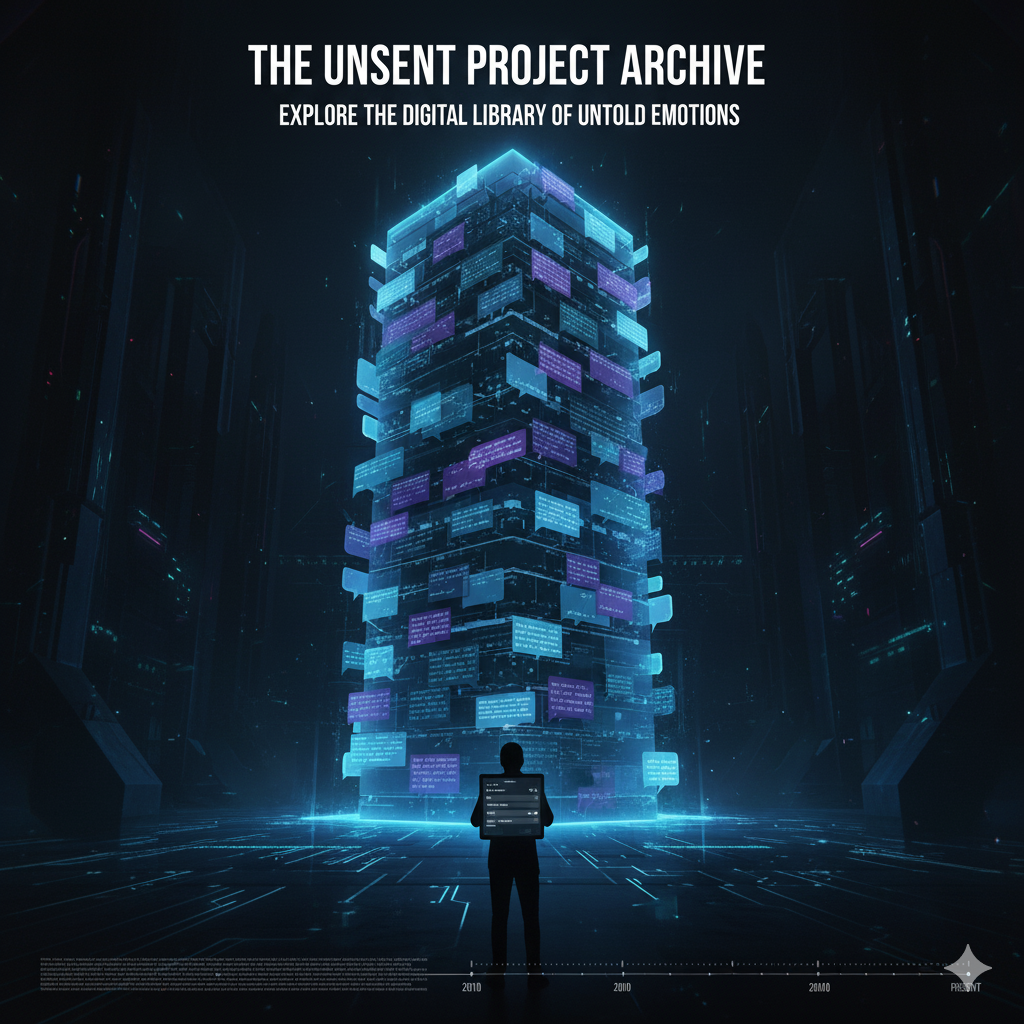
As we wander through this, I’ll pull back the curtain on what the archive really is, how it hums along, why it tugs at so many heartstrings, ways you could dip in (or craft your own quiet version), the feelings it stirs up, and the way it’s quietly reshaping how we think about our online whispers.
What Is the Unsent Project Archive?
Picture the Unsent Project Archive as a vast, ever-growing echo chamber for the things we almost said. It’s a searchable collection of messages from folks everywhere—confessions that stayed bottled, apologies that never landed, memories we kept to ourselves, hopes we didn’t dare voice. These aren’t polished essays; they’re raw snippets, often just a sentence or two, dropped in by people who needed to get them out without the fallout.
What sets it apart from your locked journal? It’s public if you want it to be, but totally faceless. No usernames, no profiles, no trail back to you. You just show up, spill your unsent words into a simple form, tag it with a color that feels right, and let it join the mosaic. The archive gives you tools to poke around—search by a name that keeps popping into your head, sift through moods via hues, or just let the scroll pull you into someone else’s unfinished story.
It’s less about who the message was for and more about what it does for you: that sweet exhale when you finally let it exist somewhere beyond your screen.
The Spark & Evolution of the Archive
Every corner of the internet worth lingering in starts with a spark that feels almost accidental. For the Unsent Project Archive, it was this quiet wonder: what if we gave those unsent messages a place to land? What happens when you pair a half-typed confession with a color that captures its soul? That simple itch turned into the original project, a little art experiment inviting people to share their “first love” drafts.
But curiosity like that doesn’t stay small. It snowballed—first into thousands of submissions, then millions, each one a thread in this massive tapestry of almosts. What kicked off as a creative lark evolved into a full-blown archive: searchable, color-coded, endlessly browseable. Now, with over five million entries and counting, it’s not just a site; it’s a mirror for the modern soul.
We’re swimming in a sea of instant shares—tweets, stories, voice notes flying every which way. The archive pushes back gently: yeah, but what about the ones we held onto? The might-have-beens, the whispers we swallowed, the texts our thumbs refused to launch. It carves out space for them, turning personal pauses into something profoundly collective.
How the Archive Works: From Thought to Publish
Stepping into the Unsent Project Archive feels less like filling out a form and more like slipping a note under a door. It’s straightforward, but every step carries weight. Let’s trace it together, like we’re doing it side by side.
You start by settling into the quiet—the kind where thoughts you’ve been dodging finally surface. Grab your phone or open the site, and let the words tumble out. “To Alex…” if a name fits, or just dive straight into the feeling. It’s not about crafting a novel; it’s about capturing that exact moment you froze last time.
Then the color choice hits, and it always slows me down in the best way. Scroll through the palette: is this a stormy gray for the confusion, a warm amber for the nostalgia, a sharp teal for the unresolved spark? That shade isn’t fluff—it’s your way of saying, “This is what it feels like in my chest.” It tags the emotion so anyone wandering the archive later can sense it at a glance.
Submission is the leap: anonymous from the jump, no strings, no sign-up dance. Most setups nudge you to one per day, keeping it real and reflective rather than a spam fest. You click, and off it goes into the moderation queue— a behind-the-scenes filter to keep things kind and true. It might surface in hours or days, but once it does, it’s there, floating in the digital ether.
Browsing comes next, and that’s where the pull really sets in. Type a name that’s been haunting you (or yeah, your own, on a curious night). Or chase a mood—“give me all the greens today.” The archive unfolds like a river of color blocks, each one cradling a stranger’s unsent heart. You scroll, you pause, you nod. And somewhere in there, your own story winks back at you.
Emotional Currents in the Archive: What Lives There
Lose yourself in the Unsent Project Archive for a bit, and it’s like tuning into the world’s quietest radio station—tuning forks of feeling that hum the same melodies over and over, just in different keys.
You’ll drift into the first-love territory first, those electric starts and sharp ends: “The way you laughed in the rain—I still chase that sound.” Or the gut-twists: “You vanished, and I pretended it didn’t carve me hollow.” They capture the what-ifs with a tenderness that stings sweet.
Apologies weave through like threads of silk and sandpaper. “I should’ve said I was proud of you sooner.” “Forgiveness came quiet, but you’ll never hear it from me.” There’s the buried thanks, the delayed I-love-yous, all simmering in that space between intent and action.
Friendships fade in here too, soft as fog: “Our inside jokes feel like relics now.” Family rifts murmur alongside: “I wish we’d talked about the silences sooner.” Missed turns in life show up unannounced—“That job I didn’t take because of you”—holding the everyday aches that don’t make headlines but carve deep.
And then the greens peek through, the ones about mending: “To the me who stayed too long—run now.” “I see your shadow less each day.” These aren’t sent because they’re for the sender, a private bloom in public view.
The colors tie it all together, acting like secret codes. A quick glance at crimson screams unfinished fire; slate blue wraps around the slow drown; soft peach hints at the almost-there. It’s not just reading—it’s feeling the archive pulse.
Why the Archive Resonates: The Human Spark
So what is it about this corner of the web that burrows in and stays? Why do people—me included—find themselves scrolling at midnight, nodding at entries that feel ripped from their own notebooks?
It starts with validation for the unsent life. We’re wired for “go,” for the dopamine hit of send, but so much of us lives in the draft. The archive leans in close and says, “Those drafts? They’re gold. They’re you at your most unguarded.”
Then there’s the freedom of no-receipt release. Spill your soul without the ping of judgment, the drag of explanation, the weight of waiting. It’s confession without the confessional booth’s echo.
The connections sneak up soft: you spot a line about a shared laugh long gone, and suddenly you’re not the only one replaying old voicemails. Strangers become silent witnesses, weaving a web of “oh, you too” that feels like family.
And the design? It’s no accident. Those color washes, the endless gentle scroll, the way a message lands centered and bare—it turns browsing into a ritual. Aesthetic meets ache, and the whole thing hums with something alive, something that sticks.
Participating: How to Use the Archive (And How Not To)
If the pull is there—if you feel that itch to add your voice or just peek inside—here’s how to tread it lightly and leave fuller.
For submitting: carve out a breath first. This isn’t casual venting; it’s laying down a piece of you. Type the words that keep circling back, the ones your thumb dodged last time. Choose your color like you’re naming a storm—deliberate, true. Submit, then set the phone down. No peeking right away. Let the act settle, see what shifts inside.
Browsing? Approach it like a walk in the woods—meander, but know the path out. Chase a name if it calls, filter hues when your mood needs company. But if an entry yanks too hard, close the tab. It’s a mirror, not a maze; you get to choose how deep you go.
Get creative with it: the archive’s spirit lends itself to offshoots. Jot unsent notes in a sketchbook, splash colors beside them, tuck them in a drawer for later you. Or share in a small circle—write, color, read if it feels safe. It’s prompt gold for artists, writers, anyone chasing their own unsaid stories.
And if it’s not your season? Honor that. Curiosity is the open door, but fresh wounds need tending elsewhere. The archive waits; your heart doesn’t have to rush.
Ethical & Emotional Depth in the Archive
Raw spaces like the Unsent Project Archive come laced with light and shadow—you can’t have one without respecting the other.
Anonymity feels like a warm coat, but it’s not bulletproof. A too-specific detail—“that diner on Route 66 with the flickering neon”—might light up for the wrong eyes. The archive nudges: keep it veiled. Once words are out, they’re screenshot fodder, shareable whispers.
The scroll can stir ghosts you didn’t invite. One entry about lost time with a parent, and your own unresolved afternoon floods back. It’s cathartic until it’s not—beautiful until it bruises. Remember, this isn’t a guided session with a safety net. If it tips heavy, ground yourself: walk, call a friend, let it pass.
Permanence is the quiet rule. Submit, and it likely stays—etched in the archive’s stone. That’s the point, the poetry: your unsent becomes eternal. But it means writing with eyes wide: are these words ready for the wide world, even blurred?
Entries run the gamut—heart-spills, experiments, echoes of real pain. Not every one’s gospel truth, and that’s okay. You’re the gatekeeper here: curate what feeds you, skip what drains.
Design, Tech & The Archive’s Underlying Structure
Under the emotional hum of the Unsent Project Archive lies some smart, subtle engineering—especially if you’re the type who geeks out on how the sausage gets made.
The entry point is butter-smooth: message box, color picker, submit button. No hoops, no walls—that low bar invites the messy truths that might otherwise stay buried.
Colors aren’t gimmicks; they’re metadata magic. Tag with teal, and suddenly your entry joins a stream of similar vibes, letting browsers chase feelings like threads in a sweater. It turns abstract ache into something navigable.
Search lives at the heart: names for the personal hunt, keywords for the thematic dive, hues for the mood surf. It transforms a static pile of posts into a breathing world you can explore at whim.
Privacy’s the backbone—no personal crumbs collected, just pure, untraceable drops. Moderation hums quietly: daily limits curb floods, human (or smart) eyes scan for harm. It keeps the space sacred without stifling the flow.
On mobile, it shines—thumb-scroll friendly, colors popping against night-mode screens. It’s built for those 2 a.m. confessions, when the world’s asleep and your words need air. The whole setup whispers: “We see you, we get the timing.”
Cultural Implications: Why This Archive Matters Now
The Unsent Project Archive isn’t some quirky side project; it’s tapping into the exact vein of our now—overconnected yet achingly alone.
We’re all performers in the grand social scroll, curating feeds like museum exhibits. But the unsent? That’s the backstage chaos, the outtakes we edit out. Bringing them forward flips the script, reminding us the real stories live in the cuts.
It punches back at the polish obsession. In a timeline of filtered sunsets and caption-ready wins, these raw drafts scream authenticity. No wonder it draws in the scroll-weary, the ones craving real over reel—Gen Z especially, with their quiet quests for what’s beneath the surface.
Bigger picture: it’s a time capsule for sociologists, fodder for poets, case studies for shrinks. A snapshot of collective pauses in an era of perpetual go. What we almost said says as much about us as what we did.
Reader Stories & Archive Moments — What The Entries Reveal
Flip through the Unsent Project Archive, and certain lines hook like fishbone—short, sharp, gone but unforgettable. “Your coffee mug still sits on my shelf, untouched.” Or “I practiced this apology in the mirror a hundred times.” They land blunt, no frills, just the bone of feeling.
What they uncover is this: the unsent often hits harder because it stops at the edge of brave. No tidy wrap-up, no mutual nod—just the pure pulse of vulnerability, hanging in air.
And the gut-punch? Spotting your own echo: the exact phrase you deleted last week, in the same faded lavender you’d have picked. It’s like the archive reaches through the screen, taps your shoulder, and says, “You’re not drafting alone.”
How to Write Your Own Entry (Or Build Your Personal Archive)
Feeling the tug? Whether you’re ready for the public pool or just a solo swim, here’s a loose map to get you there.
Find your pocket of peace—kitchen table at dawn, park bench at dusk. Crack open whatever holds words: app, paper, voice memo. Probe gently: what’s the one message that keeps knocking? Let it pour—no spellcheck, no second drafts. Then the color: close your eyes, what shade swims up? Crimson for the fire, ivory for the quiet fade? Mark it down.
If you’re heading public: scan for landmines—no addresses, no rare tattoos. Submit to the archive, watch it vanish into the queue, then step into the day. Feel the shift.
For your private vault: a folder on your drive, a notebook in your bag. Date each one, splash the color (digital swatch or watercolor smear), circle back later: “What’s it stirring now?” Over time, it becomes your secret seasons— a flipbook of growth, ghosts, graces.
The Future of the Unsent Project Archive & What’s Next
This archive’s got legs—plenty of room to stretch into shapes we haven’t dreamed yet.
Envision pop-up realms: rooms where messages drift like fireflies on walls, colors shifting with the crowd’s breath. Or clever layers: maps of dominant moods by city, whispers of trends in what we hold back.
Branch out beyond text—unsent doodles, voice clips that capture the crack in your throat, photos with captions you swallowed. The core idea (pause + color + release) fits anywhere feeling lives.
For creators and coders: it’s a blueprint. Slap that framework on wellness journals, art collabs, even corporate feedback loops (anonymous unsent kudos?). The ripple’s just starting.
FAQs
Final Thoughts — Why the Unsent Project Archive Matters to You
Deep down, the Unsent Project Archive is a love letter to the parts of us that hesitate. Those drafts we hoard, the words we weigh and set aside—they don’t fade; they ferment, flavoring our quiet hours. By giving them color, company, a corner to curl up in, you alchemize ache into art.
Type it out, hue it up, drop it in—and watch a ghost turn witness. Browse the rest, and feel the threads pull tight: your pause, echoed in a thousand others. You emerge a touch unburdened, a smidge more seen.